In January 2019, a standard Canadian letter cost $1.05 to mail. Under the rate the 2026 federal budget proposes for 2027, that same letter will cost $2.00 — a 90% increase in eight years. For a business that mails hundreds of envelopes a month, the path between those two numbers matters more than the destination, because it shows exactly how fast these costs can move and what locks a rate down.
This timeline pulls every rate change from Canada Post’s own announcements and lays out what each one did to a realistic mailing budget. It ends where every 2027 planning conversation should: with what is confirmed, what is not, and the one tool that freezes today’s price regardless of what happens next.
The timeline: 2019 to 2027
Each entry below is the domestic standard letter rate (single stamp / stamp booklet or coil), with the date it took effect:
- January 14, 2019 — $1.05 / $0.90. The rate rose 2¢ from 2018, part of the steady annual rhythm Canada Post kept through the decade.
- January 13, 2020 — $1.07 / $0.92. Another 2¢. Nobody watching the mailroom blinked.
- 2020 to 2024 — frozen at $1.07. Four straight years with no domestic rate increase, spanning the pandemic and its aftermath. This freeze is a big part of why the next jump landed so hard.
- May 6, 2024 — $1.15 / $0.99. An 8¢ increase, the first since early 2020, tied to Canada Post’s financial deterioration.
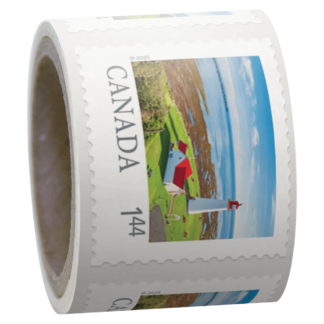
- January 13, 2025 — $1.44 / $1.24. A 25% jump in one step — 29¢ on the single-stamp rate. This is the change that turned stamp pricing into a budget conversation for small businesses.
- 2027 (proposed) — $2.00. The federal budget tabled November 5, 2026 proposes a $2.00 domestic rate, followed by annual increases of roughly 7%. No effective date has been announced. The proposal still requires Governor in Council approval, a process that runs through the Canada Gazette and typically takes months.
Two structural facts sit behind these numbers. Parcel prices are market-rate products and are not part of this increase — Canada Post confirmed to CTV News in November 2026 that only stamp rates are affected. And the budget’s own estimate of the impact is modest for individuals (about $6 a year) but the per-item math compounds quickly at business volume, as the next section shows.
What the rhythm tells you
Look at the gaps between the dates rather than the prices themselves. The pattern from 2019 to 2025 runs: +2¢, then a four-year freeze, then +8¢, then +29¢. Small annual ticks when the corporation’s finances are stable, large catch-up jumps after a stretch of losses. The 2025 increase was the largest in Canada Post’s history — a quarter of the entire rate in one step.
For budgeting, that history argues against assuming small, gradual changes. A business mailing 1,000 standard letters a month saw its postage line move like this:
- 2024 (at $1.07): $12,840 a year.
- 2025 (at $1.44): $17,280 a year — up $4,440 in one step.
- 2027 (at $2.00, if enacted as proposed): $24,000 a year — another $6,720.
From $12,840 to $24,000 in three budget years. That is the practical meaning of “the rhythm” — and why the 7% annual escalator proposed for after 2027 deserves a line in next year’s forecast rather than a footnote.
Where the 2027 increase actually stands
As of late November 2026, the $2.00 rate is an intention, not a date. The sequence required before any increase takes effect: the federal budget signals the change, the proposal goes to Governor in Council for approval, and public notice appears through the Canada Gazette — a process that has historically taken up to nine months from proposal to effective date. No Gazette proposal for the 2027 rate has been published yet.
That leaves planning in two buckets. Confirmed: the budget’s stated intent ($2.00, then about 7% annually) and the current rates in effect today ($1.44 single, $1.24 booklet). Not confirmed: the effective date, and whether the proposal passes in exactly this form. We track the Gazette and update our current rate guide the moment anything official lands.
What the increase does not touch
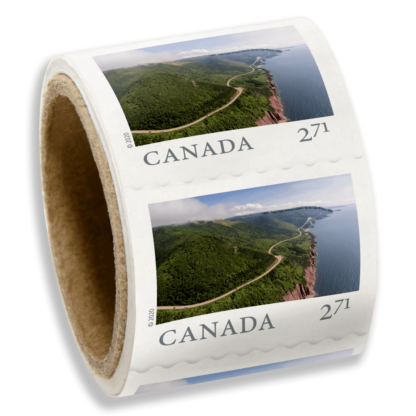
The $2.00 proposal covers the domestic standard letter rate only. The other rates a business runs into stay where they are for now: non-standard envelopes up to 100 g at $2.61, letters to the USA at $1.75, and international letters at $3.65. Parcels are priced as market-rate products and are explicitly outside this round — Canada Post confirmed that to CTV News in November 2026.
One caveat belongs next to that good news. “Not part of this increase” is not the same as “frozen forever.” The non-letter rates have their own adjustment history, and a corporation approved to raise the stamp rate by 25% has demonstrated the appetite. If your mail mix leans on oversized envelopes or cross-border letters, the 2027 stamp decision is a signal to watch, not the whole story.
The P stamp hedge: locking today’s price
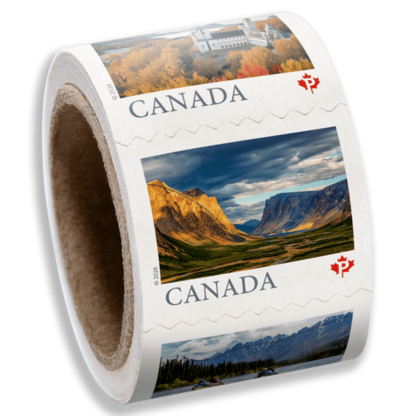
PERMANENT (P) stamps carry no dollar value — each one always covers a standard domestic letter, whatever the rate reads when you mail it. Buying P stamps today at the booklet rate of $1.24 means every stamp you hold is priced 76¢ below the proposed 2027 rate. A coil of 100 costs $124 today; the same 100 mailings at a $2.00 rate would cost $200.
One honest caveat: whether booklets and coils bought at the $1.24 rate retain that per-stamp pricing after a rate change is a question Canada Post’s published materials do not settle explicitly, and we will not pretend otherwise. What is unambiguous is the mechanism — a P stamp is a P stamp, and the rate it covers floats with the domestic letter price. For the reasoning behind choosing P stamps over metered postage at business volume, see our permanent vs. metered comparison.
A budget worked out: 150 envelopes a month
Take a mid-sized dental clinic mailing 150 patient statements and reminder letters a month, all standard domestic envelopes:
- Today, at $1.44 per letter: $2,592 a year.
- At $2.00 in 2027: $3,600 a year — an increase of $1,008.
- With the 7% escalator the year after: roughly $252 more again, and compounding annually after that.
Buying the clinic’s annual volume as P stamps today — 1,800 stamps at $1.24 — costs $2,232 and freezes the rate for every one of those envelopes. The saving against the 2027 scenario is $1,368 in the first year alone, before the escalator bites. Stock bought at today’s rates is the only position that is completely indifferent to whatever date the Gazette eventually announces.
The takeaway for 2027 planning
Eight years of history compress into three planning rules. First, rate changes come in catch-up jumps, not gentle slopes — budget for the possibility of a large single step, not a smooth 7% glide. Second, the 2027 increase has intent but no date; check the Canada Post news release page or ask us before you reforecast. Third, P stamps bought at $1.24 are the one instrument that turns the whole question off — the rate they cover moves, but your cost does not. Our coil of 100 domestic-rate stamps is stocked for exactly this kind of volume planning.
The 2019 mailer who shrugged at $1.05 had four quiet years. The 2026 mailer does not. Build the budget around the jumps, and let the locked price do the worrying for you.

Former USPS employee with 5 years of service and 25 years in corporate mailing management. Certified in Mail Systems Management and trained at the USPS Business Mail Academy, Kobe now shares trusted guidance on U.S. postage stamps and safe buying practices after retiring in 2023.