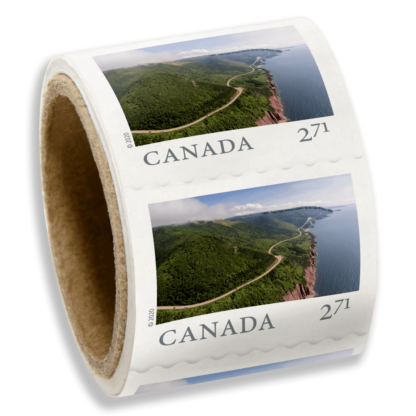
If you run a Hamilton print shop or a Winnipeg dental office and postage shows up as a real line item in your books, a legal change that took effect last March matters more to you than the next round of headlines. Bill C-15 rewrote who signs off on Canadian stamp prices. It moved through Parliament inside the budget implementation bill, not through any postal announcement, which is why most business owners never heard about it. The old approval process is gone. The replacement is faster, and it changes how you should be watching for the 2027 increase.
Here is the short version before we get into the detail. Canada Post no longer needs federal cabinet approval to change stamp prices, and the proposal no longer gets published in the Canada Gazette for public comment. The corporation now puts rate changes into its corporate plan, and Treasury Board approves them. That is not a forecast. It has been the law since March 26, 2026.
The old process, for the record
Under the Canada Post Corporation Act as it stood, the corporation could not raise stamp prices without approval from Governor in Council — the federal cabinet — and the proposal had to be published in the Canada Gazette first, where anyone could comment on it. The whole path from proposal to effective date could stretch to nine months. The round that produced today’s prices shows exactly how it ran: Canada Post started the process in spring 2024, the proposed rates appeared in the Gazette in early September 2024, final approval came in late November, and the new prices took effect on January 13, 2025. Roughly nine months, start to finish, with the public notice landing about four months before the increase did.
That four-month warning was genuinely useful. A business that read the Gazette notice in September 2024 had the whole fall to buy booklet and coil stamps at the old rate before the 25% jump landed in January. The process was slow, but the slowness was also a signal you could plan around.
What C-15 changed
C-15, formally the Budget 2025 Implementation Act, No. 1, passed third reading on February 26, 2026 and received royal assent on March 26, 2026. The amendments remove the Governor in Council approval step and the Gazette publication requirement for postage rates. In their place, Canada Post proposes rate changes in its corporate plan based on operational needs, and Treasury Board signs off. The change follows a recommendation from the industrial inquiry commission led by Commissioner William Kaplan, and unions as well as the corporation had been asking for it.
Minister Joël Lightbound walked through the contrast in testimony to the House of Commons operations and estimates committee on February 10, 2026. The old process, he told the committee, required publication in the Canada Gazette and approval through cabinet, could take three to four months, and originated, in his words, from the political side. The new version starts at Canada Post, which recommends an increase based on operational needs, presents it in its corporate plan, and then takes it to Treasury Board — a process he described as quicker and starting from the right place. He also described a second lever that gets less attention: as minister, he sends Canada Post an annual letter of intent, and he can set out expectations for stamp prices in that letter. For scale, he noted that between 2018 and 2023 stamp prices in Canada rose about 7% while comparable jurisdictions saw increases of roughly 55% — the gap this flexibility is meant to close.
What this means for the 2027 increase
The increase itself has not changed. The federal budget still calls for the single domestic stamp to go from $1.44 to $2 in 2027, with 7% annual increases after that, and no effective date has been announced. What changed is the machinery that will land it. There will be no Gazette proposal to watch for, because C-15 removed that step from the law. The public comment period that used to come with it is gone too.
The signal to monitor is now different. Watch for Canada Post’s corporate plan and for Treasury Board approval of a stamp-rate line in it. Those documents move on a government timeline without a public notice phase, and the minister’s own testimony puts the old process at three to four months with the new one designed to be faster. The practical reading: plan on a shorter runway between the first official signal and the effective date, not a longer one. A Waterloo clinic mailing 400 patient statements a month at the booklet rate of $1.24 spends $5,952 a year in postage; at $2 the same volume costs $9,600. The size of that gap is exactly why the length of the warning window matters to you.
What did not change
Three things stay put, and the minister stated each of them explicitly at committee. Preferential postage rates for libraries, in place since 1939, remain. Free postage for materials used by people who are blind, a protection that dates to 1898, remains. And parcel pricing sits outside this entire exercise — Canada Post describes its parcel rates as market-driven, and the 2027 budget line does not touch them.
Permanent stamps also keep working the way they always have. A P stamp carries no denomination and is accepted at whatever the current domestic rate happens to be, which is why buying them at $1.24 today has been the one reliable hedge through every increase so far. Whether that mechanism survives the 2027 regime in its current form has not been announced. Canada Post has been asked directly and has promised details. That answer is still pending, and any article telling you otherwise is guessing.
Three moves for your mailing budget
First, change what you monitor. Retire the Gazette watch. The documents that matter now are Canada Post’s corporate plan and Treasury Board’s approval of it, and the annual letter of intent the minister sends the corporation. When a stamp-rate line surfaces in any of those, the countdown to an effective date has started for real.
Second, recalculate how much warning you are assuming. If your buying plan borrowed the 2024 rhythm — a public notice in September for a January increase, four months of runway — that template no longer applies. A faster process compresses the window in which booklet and coil stamps still cost $1.24, which is the price that makes the pre-buy arithmetic work. A coil of 50 Permanent stamps bought this quarter holds postage that keeps working after any increase, at a per-stamp price the new regime cannot reach back and change.
Third, keep the uncertainty in the plan. Canada Post has not said how P stamps will be treated once the new rates land, and it has not said whether booklet stamps go to $2 along with singles. Buy postage you will genuinely use, at the volume your mailroom actually runs, and treat anything beyond that as speculation rather than strategy. Our comparison of Permanent stamps versus metered postage covers why the stamp side of that choice has held up for regular mailers.
A correction to our earlier coverage
We have previously told readers to watch the Canada Gazette for the proposal notice that would set the 2027 effective date — the tracking method that worked for the January 2025 increase. That advice is now obsolete, and this page replaces it. C-15 removed the Gazette step, so the notice we described will never be published; waiting for it would mean waiting forever. Our guide to what the 2027 stamp increase means for your business explains the budget math in detail, and the full timeline of past increases lives in our stamp price history. Read the process sections of those pages alongside this one.
The price of a stamp in Canada is now set closer to the corporation that delivers the mail and farther from the public comment process that used to slow it down. For a small business, that cuts both ways: less warning, but the same old trick of buying Permanent stamps at today’s booklet price while it lasts. The window just got shorter. Plan like it.

Former USPS employee with 5 years of service and 25 years in corporate mailing management. Certified in Mail Systems Management and trained at the USPS Business Mail Academy, Kobe now shares trusted guidance on U.S. postage stamps and safe buying practices after retiring in 2023.