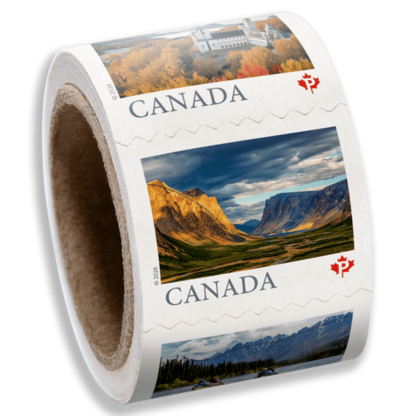
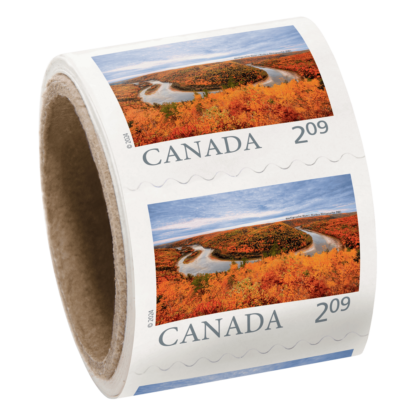
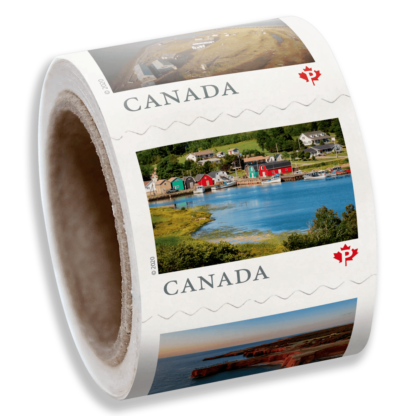
Two direct mail products, one decision, and most small businesses overthink it. Neighbourhood Mail™ sends your flyer or postcard to every address in a chosen route, unsolicited and unaddressed. Personalized Mail™ addresses a named person at a known address, piece by piece, at a published rate that starts at $0.56 for a machineable standard piece. The choice comes down to a single question — are you hunting a neighbourhood or talking to a customer list? — and the cost math below will tell you which side of it you stand on. We will also show you where Canada Post’s own volume discounts quietly change the answer, because almost nobody writes about those numbers accurately.
What Each Product Actually Is
Neighbourhood Mail is the flyer program. You pick delivery routes — with Canada Post’s free Precision Targeter™ tool or a marketing partner — print your piece, and every household on the route gets one. Nobody’s name is on it. A restaurant promoting a Tuesday special, a new dental clinic introducing itself to four postal codes, a landscaping company working its own subdivision: all classic Neighbourhood Mail. The pitch is saturation. The tradeoff is that most of the people holding your flyer never asked for it.
Personalized Mail is the addressed program. Each piece carries a name and a mailing address you already hold — past customers, a rented prospect list, members on a renewal cycle. It travels through the mailstream like a letter, which is why pricing follows letter conventions: machineable standard pieces start at $0.56 each under the rate sheet effective March 23, 2026, with rates rising by weight and size class from there. A fitness studio emailing lapsed members a win-back postcard, an insurance broker mailing renewal notices, a charity writing to last year’s donors — these are Personalized Mail jobs, because the recipient is known before the piece is printed.
The Cost Structures Are Not Even Comparable
This is where the two products part company, and where most comparison posts go vague.
Personalized Mail prices per piece. You pay roughly $0.56 for each machineable standard piece, so 5,000 pieces runs about $2,800 in postage before print. The number scales linearly. Send more, pay proportionally more, with no volume cliff that rescues you — the rate sheet is the rate sheet.
Neighbourhood Mail prices per piece too, but the published per-piece rate sits lower than addressed mail, and on top of that base rate sits a discount ladder that almost no blog reports correctly. Under the Solutions for Small Business™ program — free to join, no agreement required — the volume discounts run 5% at 35,000 pieces a year, 10% between 35,001 and 60,000, and 15% between 60,001 and 100,000, recalculated quarterly against your trailing twelve months. Those thresholds sound enterprise-sized until you notice they are annual, not per campaign. A gym mailing 4,000 flyers a month hits the 5% tier by November without ever thinking about it.
One honest gap: Canada Post publishes the Neighbourhood Mail base rate in its Smartmail Marketing price sheet rather than a single tidy web number, and we will not invent one here. Confirm the current per-piece rate through Precision Targeter, which estimates campaign cost as you build the route — the tool prices your actual mailing instead of quoting averages.

Three Businesses, Three Right Answers
The new local service business. A barbershop opening in Guelph needs awareness within two kilometres, not relationships. Its customer list is empty. Neighbourhood Mail wins by default, and the 5% volume tier arrives faster than the owner expects if flyers go out monthly.
The established retailer with a loyalty list. A St. John’s boutique with 3,000 past customers holding birthdays and purchase history gets nothing from blanketing random mailboxes. Personalized Mail converts the list it already paid to build. At 3,000 pieces the postage runs near $1,680, and every piece lands with a name on it.
The B2B operation. A commercial cleaning company targeting office managers across thirty buildings knows exactly who decides. Personalized Mail, no contest — saturation delivery to houses would be paying to reach people who cannot buy.
Notice the pattern. List size decides. No list, Neighbourhood Mail. A list worth protecting, Personalized Mail. Businesses in the middle — small list, broad catchment — often run both, saturation drops for acquisition and addressed pieces for retention, and the budget split follows the response data rather than anyone’s rule of thumb.
Planning the Route Without Paying for Help
Precision Targeter is free and does more than owners expect. You draw delivery areas seven ways — drive time, radius, whole municipalities, buffer zones around your location among them — then filter routes by up to three demographic categories drawn from census data: household income, age, dwelling type. The map shows delivery volume per route and estimated cost before you commit to print. A Kingston HVAC company can exclude the neighbourhoods it already serves, cap the campaign at the routes with the newest housing stock, and walk away with a route list and a cost estimate in under an hour. The same tool handles the ordering workflow, so the campaign you planned is the campaign you submit.
Preparation rules matter more for Neighbourhood Mail than beginners expect — bundling, labelling and volume minimums follow the Smartmail Marketing customer guide, and a marketing partner can handle the print-and-prepare side if your team would rather not. Personalized Mail preparation looks like ordinary letter preparation: machineable size, clean address data, proper indicia or postage. Data quality is the hidden cost. A rented list with 8% bad addresses is 8% of your postage spent on nobody.
Timing It Against the Holiday Window
Canada Post’s own holiday announcement, published November 12, leans hard into the season’s direct mail potential, and the reason is practical: November and December are when households actually pay attention to what arrives in the mailbox. Campaigns booked for early December ride that attention, but they also compete with peak-season volume across the network, so print and preparation lead times matter more in December than in March. A spring promotion can be planned casually. A holiday drop cannot.
Where Regular Stamped Mail Fits
Neither product replaces the mail your business already sends one envelope at a time. Invoices, statements, personal correspondence and follow-ups travel as ordinary stamped letters, and that is the volume where stamp buying discipline matters — a coil of oversized-mail-rate permanent stamps covers the larger envelopes, while standard letters ride on permanent stamps bought at booklet or coil rates instead of the single-stamp counter price. The arithmetic is the same discipline that permanent stamps hold over metered postage: buy the rate before it rises. For the full current rate picture alongside these programs, the 2026 rate guide keeps the numbers in one place.
Direct mail campaigns and stamped letters also feed each other. A Neighbourhood Mail drop that lands in 10,000 mailboxes produces replies, and replies come back as addressed letters needing postage. Businesses that plan both sides together buy stamps in bulk and never pay counter rates on the response mail.
The Decision, Compressed
Unknown audience, local catchment, saturation is the point — Neighbourhood Mail, and the volume discounts arrive on their own as your cadence builds. Known recipients, relationship value per piece, personalization is the point — Personalized Mail at $0.56 to start. Run the Precision Targeter estimate on a real route before you believe any comparison, this one included, because route-level pricing beats every general rule ever written about direct mail.

Former USPS employee with 5 years of service and 25 years in corporate mailing management. Certified in Mail Systems Management and trained at the USPS Business Mail Academy, Kobe now shares trusted guidance on U.S. postage stamps and safe buying practices after retiring in 2023.