Every Canada Post stamp price that matters for 2026 lives on this page. The current rates took effect on January 13, 2025 and remain in force today, which makes this the moment to learn them properly: the federal budget tabled on November 5, 2026 confirmed that the single domestic stamp rises to $2.00 in 2027, with further increases of 7 percent a year after that. Knowing the full 2026 rate structure now is how a small business budgets correctly for the year ahead and decides what to stock before the next increase lands.
The tables below cover every letter weight bracket for domestic, United States, and international mail, explain how Permanent stamps change the math, and finish with the questions business mailers actually ask. All figures come from Canada Post’s official published rates.
Domestic Standard Letter Rates in 2026
Standard size covers the everyday envelope: up to 30 grams for the base rate, which is roughly five sheets of paper plus the envelope itself.
| Weight | Single Stamp | Booklet or Coil (per stamp) |
|---|---|---|
| Up to 30 g (about 5 sheets) | $1.44 | $1.24 |
| 30 g to 50 g (about 9 sheets) | $1.75 | $1.75 |
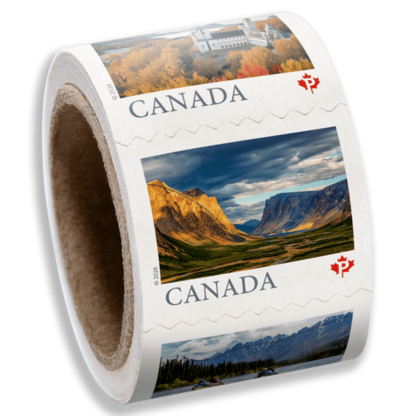
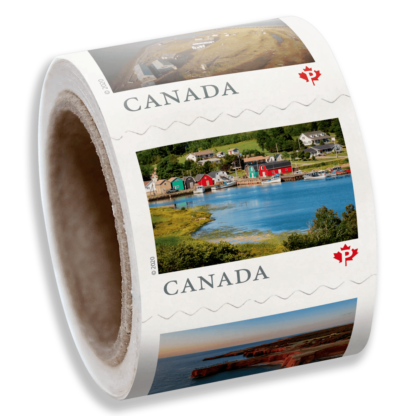
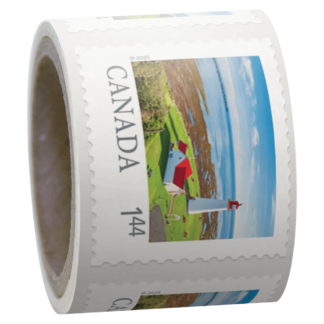
The 20-cent gap between the single stamp price and the booklet price is the quiet headline of this whole page. A business mailing 250 letters a month saves $500 a year simply by buying Permanent stamps in a coil of 100 instead of singles at the counter, and the stamps never expire or lose value when rates rise.
Domestic Non-Standard and Oversize Rates in 2026
Envelopes that are larger, thicker, or heavier than the standard format move to the non-standard and oversize table:
| Weight | Rate |
|---|---|
| Up to 100 g (about 20 sheets) | $2.61 |
| 100 g to 200 g | $4.29 |
| 200 g to 300 g | $5.98 |
| 300 g to 400 g | $6.85 |
| 400 g to 500 g | $7.36 |
Above 500 grams, the piece is no longer a letter at all and travels as a parcel with its own rate card. The practical takeaway for offices is that the jump from a standard letter to the first oversize bracket is steep: a thick envelope crossing into non-standard territory at 100 grams costs nearly twice the booklet rate. When a mailing is borderline, splitting contents or lighter cardstock is often the cheapest upgrade available.

United States Letter Rates in 2026
| Weight | Rate |
|---|---|
| Up to 30 g | $1.75 |
| 30 g to 50 g | $2.61 |
| Up to 100 g (non-standard) | $4.29 |
| 100 g to 200 g | $7.49 |
| 200 g to 500 g | $14.99 |
The U.S. base rate of $1.75 is itself a reminder of how recently the ground moved: it rose from $1.40 on January 13, 2025, a 25 percent increase in one step. Businesses with recurring U.S. correspondence should assume cross-border letter rates are no longer stable year to year.
International Letter Rates in 2026
| Weight | Rate |
|---|---|
| Up to 30 g | $3.65 |
| 30 g to 50 g | $5.21 |
| Up to 100 g (non-standard) | $8.60 |
| 100 g to 200 g | $14.99 |
| 200 g to 500 g | $29.96 |
International rates rose in the same January 2025 move, with the base letter rate climbing from $2.92 to $3.65. The current full rate schedule is published on Canada Post’s official stamp rates page, and the regulation behind the 2025 increase is recorded in the Canada Gazette under SOR/2024-262.
How Permanent Stamps Change the Math
Permanent stamps, marked with a P instead of a face value, are always accepted at the current domestic postage rate for a standard letter, even after rates increase. Old face-value stamps have not lost their usefulness either: combine enough of them so their total face value meets the current domestic rate, and the letter mails. This mechanism is the core of the case for buying coils instead of singles, and our explainer on Permanent stamps versus metered postage covers the operational details for growing mailrooms.
One honesty note belongs here. The 2027 increase to $2.00 has been confirmed in the federal budget, but Canada Post has not yet announced how booklet and coil prices will move in 2027, nor formally confirmed the long-term treatment of Permanent stamps after the increase. The rate protection Permanent stamps have always offered is expected to continue, but until the official announcement, treat 2027 booklet pricing as an open question and check back here.
The 2027 Increase and What It Means
The federal budget of November 5, 2026 set the trajectory: the single domestic stamp goes from $1.44 to $2.00 in 2027, and thereafter rises by 7 percent annually. The government’s own estimate puts the cost at roughly $6 a year for consumers and $9 a year for small businesses, which sounds tolerable until you multiply it across a real mail program and remember the 7 percent compounding does not stop. For a business mailing 250 standard letters a month, moving from singles at $2.00 to booklets at the current $1.24 rate is the difference between a budget line that grows every year and one that is locked. Our guide to saving money on stamps in Canada works through the full procurement logic, and the bulk buying mechanics are covered in corporate bulk stamp purchasing.
What Big Volume Discounts Actually Exist
Canada Post does offer commercial letter discounts, but the thresholds matter. Domestic Incentive Lettermail pricing starts at 1,000 pieces per mailing, with rates from $1.23 per piece; the international version starts at 100 pieces. A business mailing 100 to 500 letters a month does not reach the domestic threshold, which is the polite way of saying that booklet and coil pricing at $1.24 per stamp is, for most small mailers, the real floor. The one-cent difference between the commercial starting rate and the booklet rate tells you how much room there is below it. If your volume genuinely runs into four figures per mailing, the discount program deserves a conversation with Canada Post directly; if it does not, a 50-stamp coil at the domestic rate is the practical procurement unit.
Frequently Asked Questions
How much is a single stamp in Canada in 2026?
A single domestic standard letter stamp costs $1.44 at retail. Per-stamp pricing drops to $1.24 when you buy the same domestic rate stamps in a booklet or coil. Both figures have been in effect since January 13, 2025.
How much is a booklet of stamps in Canada?
Booklets and coils work out to $1.24 per Permanent domestic rate stamp in 2026. A booklet of 10 costs $12.40, a coil of 50 costs $62, and a coil of 100 costs $124 at face value, before any retailer discounting.
How much does it cost to mail a letter to the United States from Canada?
A standard letter up to 30 grams costs $1.75 to send from Canada to the United States. Heavier letters scale through $2.61 for 30 to 50 grams, $4.29 up to 100 grams, $7.49 up to 200 grams, and $14.99 up to 500 grams.
How much is international postage from Canada?
A standard letter to overseas destinations costs $3.65 for the first 30 grams, then $5.21 up to 50 grams, $8.60 up to 100 grams, $14.99 up to 200 grams, and $29.96 up to 500 grams.
Do old stamps still work in Canada?
Yes. Permanent stamps are honored at the current domestic rate no matter when purchased, and old face-value stamps remain valid as long as the combined face value on the envelope meets the current rate. There is no expiry date on Canadian stamps.
When are stamp prices going up in Canada?
The federal budget confirmed the single domestic stamp will rise to $2.00 in 2027, with 7 percent annual increases thereafter. The exact effective date has not been announced, nor have the 2027 booklet rates or the final details of the Permanent stamp program after the increase. This page will be updated when the official date is published.
Are stamps cheaper in bulk?
For practical purposes, yes: the booklet and coil rate of $1.24 per stamp is 14 percent below the single stamp price, and that is the deepest reliable discount available to mailers below the 1,000-piece commercial threshold. Retailers like canadapoststamp.com sell coils and bulk quantities at or below face value, which is where volume buyers actually save.
Rate tables do not make exciting reading, which is exactly why the businesses that read them once a year are the ones whose postage budgets hold. The 2026 structure is stable, the 2027 increase is coming, and the gap between $1.24 and $2.00 is the single largest arbitrage available to a small mailer this decade. If you are planning a December mailing program, pair this page with our 2026 holiday mailing deadlines guide and buy your postage before the rush, not during it.

Former USPS employee with 5 years of service and 25 years in corporate mailing management. Certified in Mail Systems Management and trained at the USPS Business Mail Academy, Kobe now shares trusted guidance on U.S. postage stamps and safe buying practices after retiring in 2023.